
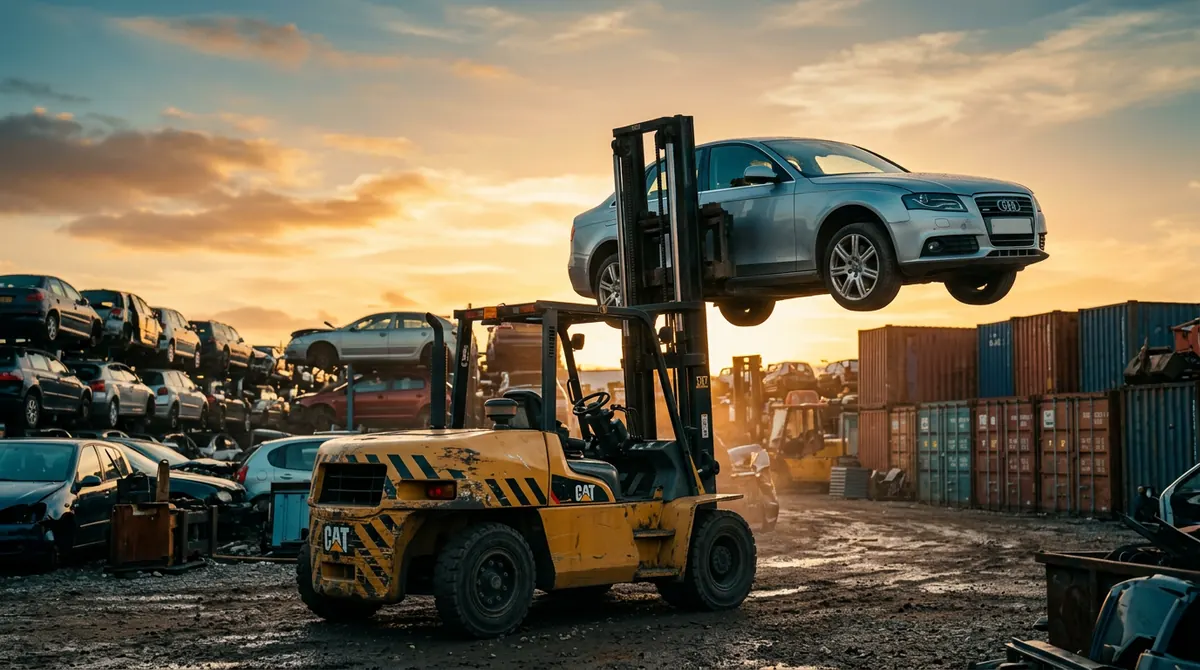
UK businesses that treat end-of-life vehicles operate within environmental rules. An authorised treatment facility, or ATF, is permitted by the relevant regulator to receive and treat those vehicles. A parts reseller may not be the facility that dismantled the donor, so identify each business's role.
Check the regulator for the site
Check the actual receiving or treatment site, not just a trading name or a collector's telephone number. Use the official register for the nation in which it operates:
- England: Environment Agency scrapyard finder.
- Wales: Natural Resources Wales treatment-facility register.
- Scotland: SEPA waste motor vehicle guidance and ATF register.
- Northern Ireland: DAERA authorised treatment facility register.
Match the address and authorised activity. If the record is unclear, ask the regulator rather than treating a directory listing as approval. The nations have different regulatory arrangements; England's Environment Agency guidance is not the rulebook for all four.
What happens to an end-of-life vehicle?
Depollution deals with hazardous materials before further treatment. Reusable components may then be removed, identified and stored. The precise activity depends on the vehicle and the site's authorisation. England's guidance also distinguishes a removed part that remains waste from one certain to be reused for its original purpose without further testing or repair. That environmental status is separate from a buyer's compatibility or condition decision.
What authorisation does not prove
An ATF record does not certify every part the business sells. Ask what was tested on the offered item, when, and with what result. A reseller may obtain parts from another business: establish who is selling to you, who dismantled the donor if known, and whose name will appear on the invoice. A lack of donor information is a reason to ask more questions, not proof of wrongdoing.
The buyer's evidence checklist
Request the complete component number, current photographs, known defects, included items and available test records. Confirm packaging, delivery access, fitting requirements, returns and any warranty in writing. Large assemblies may need unloading arrangements. Keep the listing and correspondence with the invoice; a photograph or a donor's mileage does not establish remaining life.
If you are disposing of your own car
Buying a removed component is different from arranging disposal of a whole vehicle. Check the receiving ATF and follow the current DVLA notification and certificate rules in our scrapping checklist. A collector and the receiving facility may be different businesses. Do not treat this buyer's overview as instructions or authorisation to dismantle a vehicle yourself.
Sources & further reading
Sources used for this guide
- England — find an authorised vehicle scrapyard- Environment Agency
- Wales — end-of-life vehicle treatment facility register- Natural Resources Wales
- Scotland — current waste motor vehicle guidance and ATF register- SEPA
- Northern Ireland — authorised treatment facility register- DAERA
- End-of-life vehicle rules for waste sites- Environment Agency
- When a motor vehicle is waste- Environment Agency
- Where vehicles can be scrapped- GOV.UK
The sources above support this guide. For safety-critical or transaction-specific decisions, use current official guidance and an appropriately qualified professional.
Frequently asked questions
Questions about this guide
Where do I check a breaker yard's authorisation?
Check the actual treatment site's address and activity with the relevant nation's regulator: Environment Agency in England, Natural Resources Wales, SEPA in Scotland or DAERA in Northern Ireland. A reseller or collection agent may not be the receiving treatment facility.
Is every parts seller an authorised treatment facility?
No. A reseller can offer parts without being the facility that treated the donor vehicle. Identify who dismantled the vehicle, who is selling the part and which business will appear on your invoice.
Does a breaker-yard listing mean a part has been tested?
No. Testing and records vary by seller and component. Ask what was actually tested, when, and for current photographs and the full identifier of the item offered.
What records should I keep when buying from a breaker?
Keep the listing, invoice, complete part number, photographs, any test evidence and the seller’s written delivery, warranty and return terms. These help resolve an identity or condition dispute later.