
OEM, aftermarket and used parts: how to compare
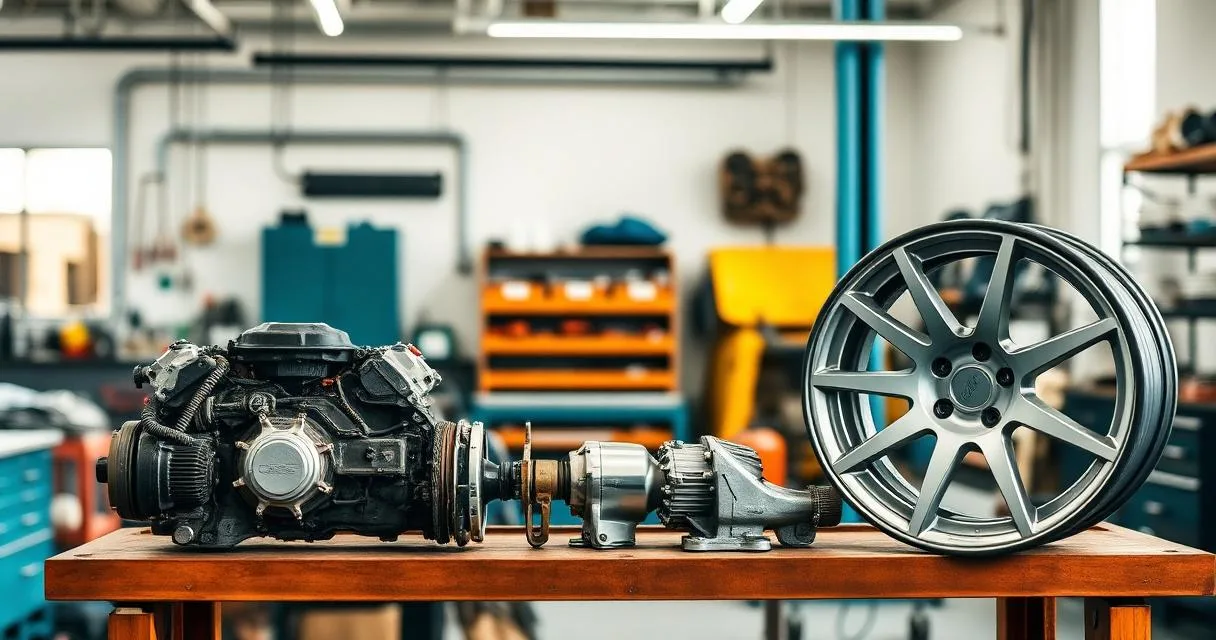
OEM, aftermarket and used describe different aspects of a part's origin or supply route. None of the labels alone proves quality, compatibility, condition or value. Start with the exact application and evidence for the individual item.
Separate origin from condition
An original manufacturer component can be new, used or reworked. An aftermarket part can also have different conditions. Ask who made the item, its complete number and what condition is actually being offered. Terms such as genuine, OE-quality or OEM-equivalent are not substitutes for an identified product and application. Our number-identification guide explains the difference between vehicle-maker, component-maker and catalogue references.
Used, refurbished and remanufactured parts
Compare the evidence behind each description:
- Used: ask about known history, damage, storage and the tests performed on the actual item. Do not infer that it was rebuilt.
- Refurbished or reconditioned: ask exactly what was cleaned, repaired, replaced and tested, and by whom. A fresh finish does not document internal work.
- Remanufactured: ask for the remanufacturer, process specification and testing records. CLEPA's industry definition describes a documented industrial process; it is not a statutory guarantee that every seller using the word follows that process.
CLEPA's circularity glossary distinguishes refurbishment from industrial remanufacturing, but identifies its relevant definitions as industry-agreed drafts. Use these as questions to clarify the offer, not as an automatic quality ranking.
Compare like-for-like components: our Yaris page explains what to ask when choosing replacement mirror glass, covers or complete wing-mirror units.
What a documented programme can tell you
Bosch eXchange describes inspecting components and replacing wearing parts within its own remanufacturing programme. Those statements apply to that programme, not every refurbished product. Ask an independent seller for its own evidence and written warranty. Do not assume another supplier follows Bosch's process, testing or commercial terms simply because the offer says exchange or remanufactured.
Exchange and core-return terms
An exchange arrangement is separate from condition: Bosch's programme can include new as well as remanufactured parts. The old unit returned to the supplier is often called a core. Before accepting an exchange offer, ask whether there is a deposit, which cores qualify, the return deadline, carriage arrangements and what happens if yours is rejected. Keep the original until the supplier and installer agree what must be returned and when; for electronic units it may also be needed for preparation.
Compare the same application and full fitted cost
Use the OEM Finder as a starting point, then confirm the actual component's specification and documented supersession. Include ancillaries, fitting, coding, calibration, delivery, returns and possible downtime. A lower component price may not mean a lower completed repair cost. Ask the installer about safety-critical requirements rather than choosing purely from the label.
Get the offer in writing
Record the identity, stated condition, work carried out, test evidence, included items and seller's terms. A voluntary warranty and statutory rights are different; see our used-parts rights guide for that distinction. If the work or specification remains unclear, resolve it before purchase rather than assuming refurbishment guarantees fitment or remaining life.
Related guides: Can you replace just the wing mirror glass?
When you have chosen the condition and specification, request a car part by reg with those details.
Use the car parts catalogue to find the component category and reference information.
No inspection can guarantee the remaining life of a used part. Confirm identity, condition evidence, fitting requirements and written supplier terms for the individual item.
Sources & further reading
Sources used for this guide
- International automotive industry definition of remanufacturing — 2016- CLEPA
- Circularity glossary — industry-agreed draft definitions- CLEPA
- Bosch eXchange — programme-specific process and core-return arrangement- Bosch
- Consumer Rights Act 2015 — goods supplied by traders- legislation.gov.uk
- Get vehicle information from DVLA- DVLA
- Vehicle log book (V5C)- DVLA
The sources above support this guide. For safety-critical or transaction-specific decisions, use current official guidance and an appropriately qualified professional.
Frequently asked questions
Questions about this guide
Is refurbished the same as remanufactured?
Do not assume the work is identical. Ask what was repaired, replaced and tested. CLEPA's industry definition describes a documented remanufacturing process, but a seller's label alone does not prove compliance or quality. Obtain the actual provider's specification and written terms.
Does an exchange part always mean a remanufactured part?
No. Exchange describes the supply arrangement; Bosch's programme can include new and remanufactured products. Confirm the offered condition separately, plus any old-unit deposit, eligibility, return deadline and carriage terms.
Does an OEM or aftermarket label guarantee a part will fit?
No. Confirm the manufacturer, complete part number and exact application. Marketing labels alone do not prove compatibility, condition or quality, and a claimed supersession needs supporting evidence.
Can an OEM part also be used?
Yes. Origin and condition describe different things. Ask who made the component, whether the actual item is new or previously used, and who provides any warranty rather than relying on one label.
How do I compare the cost of OEM, aftermarket and used parts?
Compare equivalent applications and include delivery, ancillaries, fitting, coding or calibration where needed, returns and downtime. Check condition evidence, specification and seller terms before choosing.