
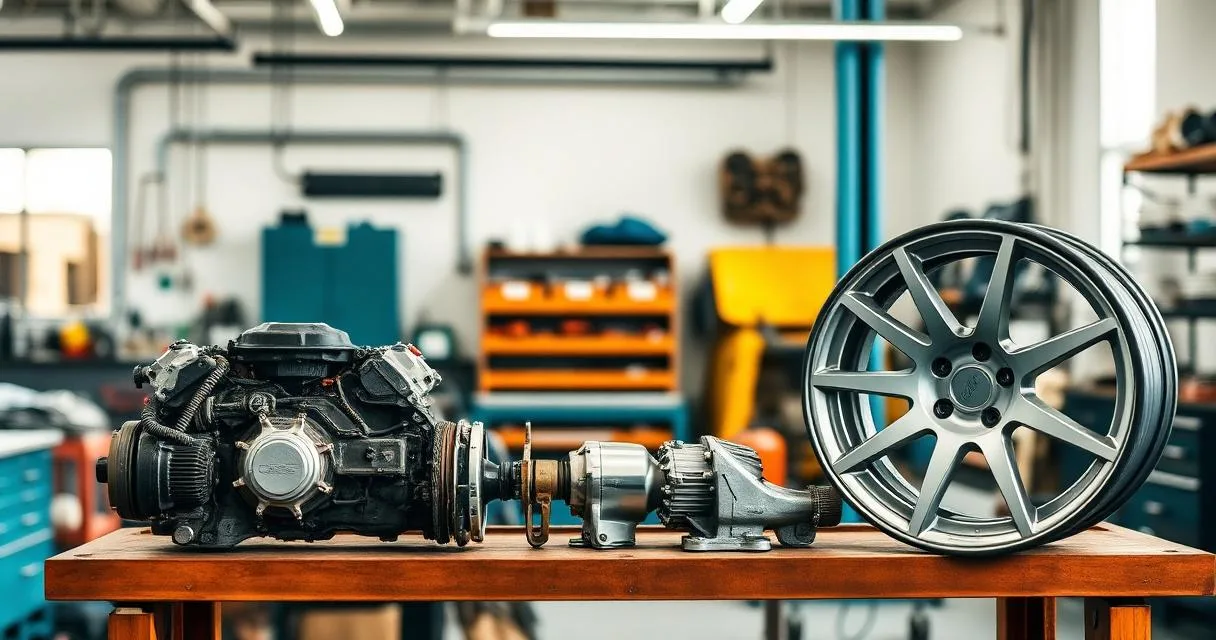
There is no reliable universal list of parts that should always be bought used or always bought new. The decision depends on the component's safety role, identity, condition evidence, availability, fitting work and the vehicle or component manufacturer's requirements.
Start with safety and specification. Ask a competent technician whether reuse is permitted and sensible for the exact component. Wear items, single-use fasteners, restraint systems and other safety-critical parts can have inspection or replacement requirements that cannot be inferred from appearance or mileage alone.
Assess a used option individually. Confirm the complete part number and build application, then ask for current photographs, donor information, known faults, test method and storage conditions. No mileage threshold, clean photograph or statement that it was 'working when removed' proves remaining service life.
Compare a new option accurately. 'New' can describe different brands and supply channels. Check manufacturer, specification, approvals where relevant, included ancillaries and warranty terms. A lower component price can be offset by missing items, unsuitable specification or repeated labour.
Compare total fitted cost and rights. Include delivery, consumables, coding, calibration, removal, return carriage and downtime. Statutory rights may apply to a consumer purchase from a trader, while voluntary warranties vary. Keep the written description and have the installer confirm requirements before ordering.
Related guides: Can you replace just the wing mirror glass?
If you decide on a new replacement, request new car parts UK with the vehicle and component details.
No inspection can guarantee the remaining life of a used part. Confirm identity, condition evidence, fitting requirements and written supplier terms for the individual item.
Sources & further reading
Sources used for this guide
- Consumer Rights Act 2015 — goods supplied by traders- legislation.gov.uk
- MOT inspection manual- DVSA
The sources above support this guide. For safety-critical or transaction-specific decisions, use current official guidance and an appropriately qualified professional.
Frequently asked questions
Questions about this guide
Should I buy a used or a new replacement part?
Compare the exact part identity, condition evidence, safety role and total fitted cost. Ask a competent technician whether reuse is suitable for that component and check the manufacturer’s current requirements.
Does donor mileage tell me how long a used part will last?
No. Mileage gives context, but it does not prove a component’s remaining life. Ask for actual photographs, known faults, test method and storage history for the individual item.
What costs should I compare besides the part price?
Include delivery, fitting, consumables, coding or calibration where needed, return carriage and possible downtime. Confirm what is included and what the seller’s written terms cover before paying.